
Around the World in 80 Bakes: Stop #30 — Christmas Cake
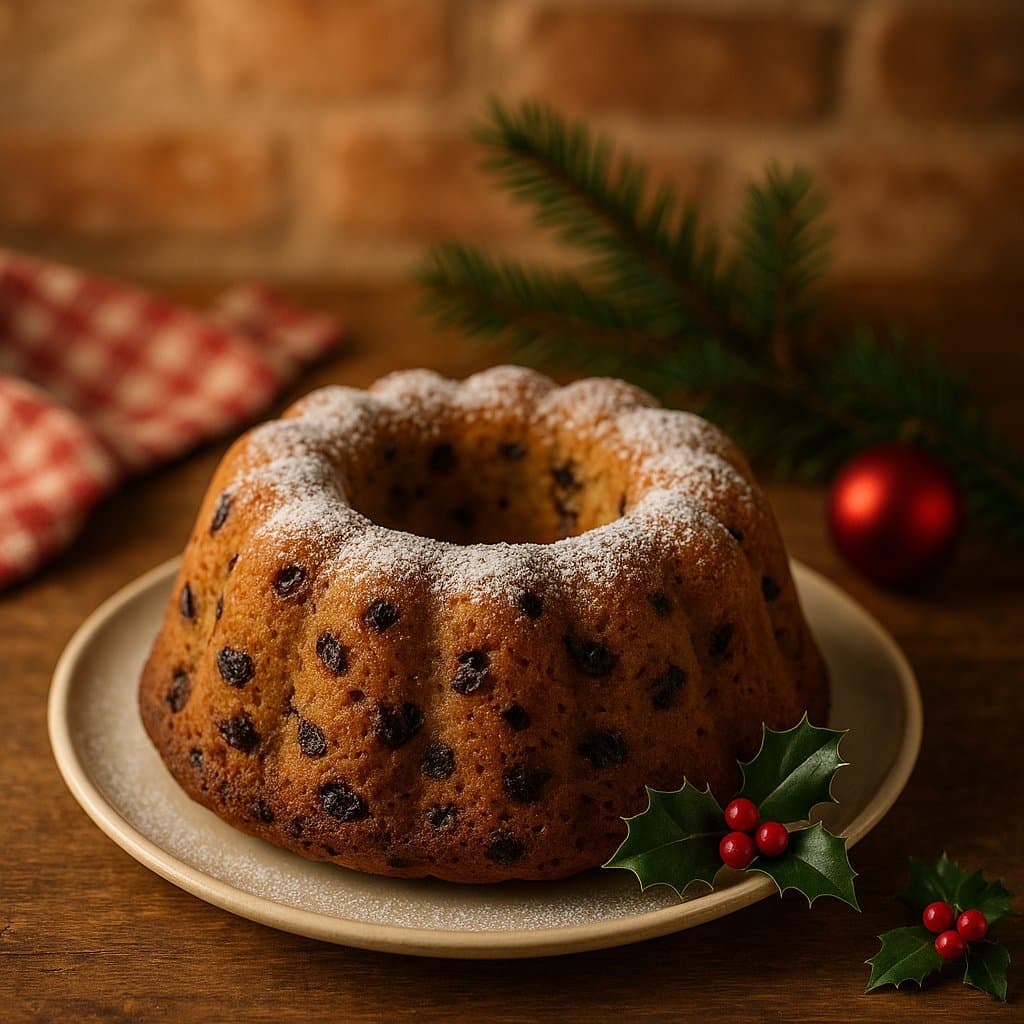
There’s something quietly reassuring about slicing into a rich fruit cake in December — the weight of tradition, the heady aroma of dried fruit and brandy, the intricate layers of marzipan and icing. But long before it became the star of British Christmas tables, fruit cake had humble beginnings rooted in porridge, fasting, and trade.
From Porridge to Pudding
The earliest ancestor of today’s Christmas fruit cake wasn’t a cake at all. In medieval England, it was plum porridge — a thick and hearty mixture of oats, dried fruits, spices, and sometimes meat broth, eaten in preparation for the Advent fast.
This warming dish wasn’t sweet in the modern sense. It was meant to fortify the body before religious abstinence, particularly during the cold, dark weeks of December. Interestingly, “plum” in medieval English referred to any dried fruit, not just plums.
Spices like cinnamon, cloves, and nutmeg were rare and expensive, often stored under lock and key. Their presence in food marked special occasions and spiritual significance. By the 14th century, with the addition of flour, eggs, and suet, this once-savoury porridge began to evolve into a boiled pudding — an early form of the Christmas plum pudding still enjoyed today.
As the Tudor period unfolded, trade routes expanded and English pantries welcomed new and exotic ingredients. Sugar, candied citrus peel, raisins, and sultanas became more available, carried into ports from the Mediterranean, North Africa, and beyond.
Wealthier homes now had access to ovens, allowing these rich, fruit-laden mixtures to be baked rather than boiled. And so, the fruit cake began to take form, slowly shifting from preservation food to celebration food. It remained deeply symbolic, with its array of spices and imported fruits representing abundance, faith, and festive joy.
In some versions, the cake was scented with rosewater or spiked with brandy, reflecting the influence of French and Mediterranean styles.
Banned and Beloved
However, not all authorities welcomed such indulgence. During the English Interregnum, when Oliver Cromwell and the Puritans governed in the mid-17th century, Christmas celebrations were strongly discouraged. Feasting, singing, and holiday baking were viewed as distractions from piety. Fruit cake, with its richness and pageantry, was banned as excessive and frivolous.
Even the Christmas holiday itself was abolished in 1647. The restrictions didn’t last, but they did mark a moment when the fruit cake became a quiet symbol of rebellion and remembrance.
With the Restoration of the monarchy and the return of public festivity, the fruit cake once again found its place on the table. By the Georgian and Victorian periods, it had become central to British celebrations.
Queen Victoria was said to prefer a lighter version of fruit cake, and her own royal wedding cake — tiered, decorated, and richly fruit-laden — helped define what a celebratory cake should look like for generations. The Victorians refined the Christmas fruit cake into the form we recognise today: soaked in brandy, wrapped in marzipan, and topped with snowy royal icing.
A Cake of Empire and Trade
This period also coincided with Britain’s growing colonial reach. The ingredients inside the cake — spices from India, citrus from the Mediterranean, dried fruits from South Africa, and sugar from the Caribbean — told the story of empire. In a sense, the Christmas fruit cake became a culinary artefact of Britain’s global expansion, baked into a single, richly spiced loaf.
Traditions began to form around the cake itself. It was often baked in late November, giving it time to mature before Christmas. Each week, a little brandy or whisky would be drizzled over it — a process lovingly referred to as “feeding” the cake.
Slices might be wrapped in parchment and ribbon, offered as gifts to friends or neighbours. In some households, charms or silver coins were baked inside the cake to bring luck. In rural areas, a slice might be placed under a pillow to inspire dreams of a future spouse or kept as a charm of good fortune.
Tradition in Every Slice
Though Britain’s version is best known, the idea of a richly fruited, spiced cake or bread is echoed around the world. German stollen, dusted with icing sugar and sometimes filled with marzipan, carries a similar festive weight.
In Italy, panettone rises tall and airy, studded with raisins and citrus peel, often gifted in elegant boxes. Portuguese families gather around bolo rei, a ring-shaped fruit cake eaten at Epiphany.
In Eastern Europe, cozonac swirls together brioche-like dough with nuts or cocoa. Even in Singapore and Malaysia, home bakers prepare a version known as kek buah — darker, often alcohol-free, and flavoured with glacé cherries and local spices.
Today, fruit cake has a mixed reputation. In some circles, it’s seen as old-fashioned or overly heavy. In others, it remains an essential expression of holiday warmth and continuity. Behind the polarised opinions lies a deep, resilient tradition — a bake that has travelled through centuries of feast and fast, empire and homecoming, adaptation and memory.
If you’re looking to carry on the tradition this year, try our Heritage Christmas Fruit Cake — a balanced, fragrant version made with care, aged gently with brandy, and perfect for gifting or sharing with loved ones. It’s not just a dessert — it’s a slice of history.