Around the World in 80 Bakes: Stop #26 — Germany’s Stollen
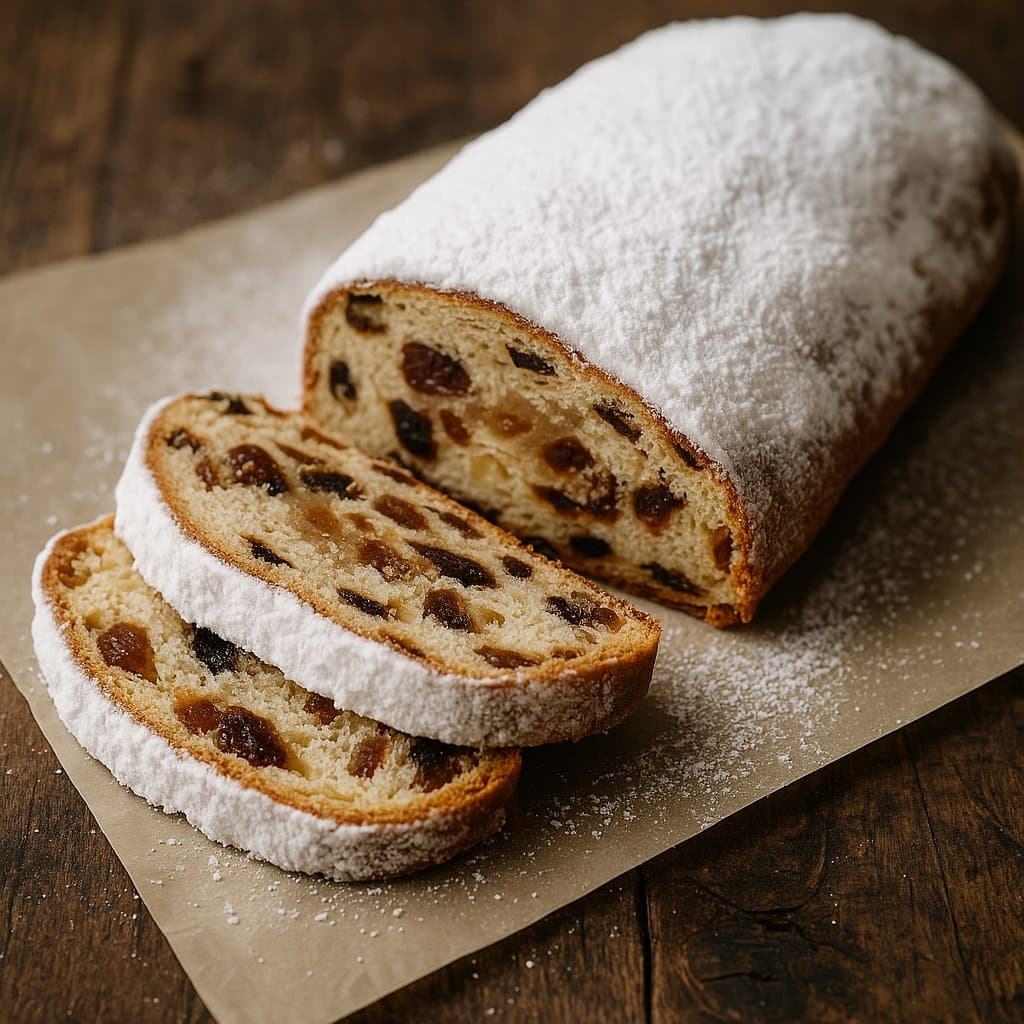
Golden, fruit-studded, and dusted with a thick veil of icing sugar, Stollen may look like a typical festive loaf — but its roots run centuries deep into European religious history, economic shifts, and even butter-related rebellion.
A Humble Beginning: From Fast to Feast
Stollen first emerged in 14th-century Germany, where it was known as Striezel or Christstollen, baked during the Advent season — a time of fasting and reflection in the Christian calendar. But the original version was nothing like today’s sweet, rich bread. Early recipes were sparse and austere, made with only flour, oats, and water — no butter, no milk, and certainly no fruit. Church rules during Advent prohibited the use of indulgent ingredients, and so Stollen began its life as a dense, dry loaf meant to symbolise penance rather than pleasure.
Butter Wars and Papal Permission
Things began to change in the 15th century, when the Saxon Prince Elector Ernst and his brother Duke Albrecht grew weary of tasteless loaves. In 1450, they petitioned the Pope to lift the butter ban. Several attempts failed — until finally, in 1490, Pope Innocent VIII issued the Butterbrief (Butter Letter), allowing the use of butter in Stollen, but only for the prince’s household. Common bakers had to pay a fee to use butter — funds which conveniently went towards building the Freiberg cathedral.
This tiny shift had lasting impact: butter returned, slowly enriching the bread and bringing it closer to the celebratory Stollen we know today.
From Dry Loaf to Festive Luxury
By the 17th century, bakers in Dresden began transforming the bread into a lavish holiday centrepiece. They added dried fruit, candied citrus peel, nuts, and eventually marzipan. Over time, Dresdner Stollen became so iconic that the city even began hosting a yearly Stollenfest. In 1730, Augustus the Strong, Elector of Saxony, commissioned a 1.8-tonne Stollen — sliced with a custom-made silver knife — to feed thousands at a grand feast.
Dresden is still considered the spiritual home of Stollen today. In fact, Dresdner Christstollen is a protected designation, much like Champagne or Parmigiano-Reggiano, and must meet strict traditional criteria to bear the name.
The Symbolism of the Shape
Traditionally, Stollen is baked in an oval shape and dusted with a generous layer of icing sugar, said to resemble the swaddled Christ child. The marzipan core — though a later addition — often represents the gift of gold from the Three Wise Men. In this way, every element of the loaf holds meaning: richness after restraint, sweetness after solemnity, and light after waiting.
From Advent to Every Table
Today, Stollen is enjoyed across Germany and beyond, especially in the lead-up to Christmas. Some families prepare it weeks in advance, letting the flavours deepen with time — a practice that reflects the anticipation and patience woven into Advent itself.
Whether you enjoy it lightly toasted with butter, paired with mulled wine, or sliced thick on a winter morning, Stollen brings centuries of festive tradition to the table — and a reminder that even the simplest of loaves can rise into something sacred.
Ready to bake your own? Try our traditional Stollen recipe — buttery, fruit-filled, and dusted with snow-like icing sugar.