Around the World in 80 Bakes : Stop #27 — Italy’s Panettone
A Bread Shrouded in Mystery
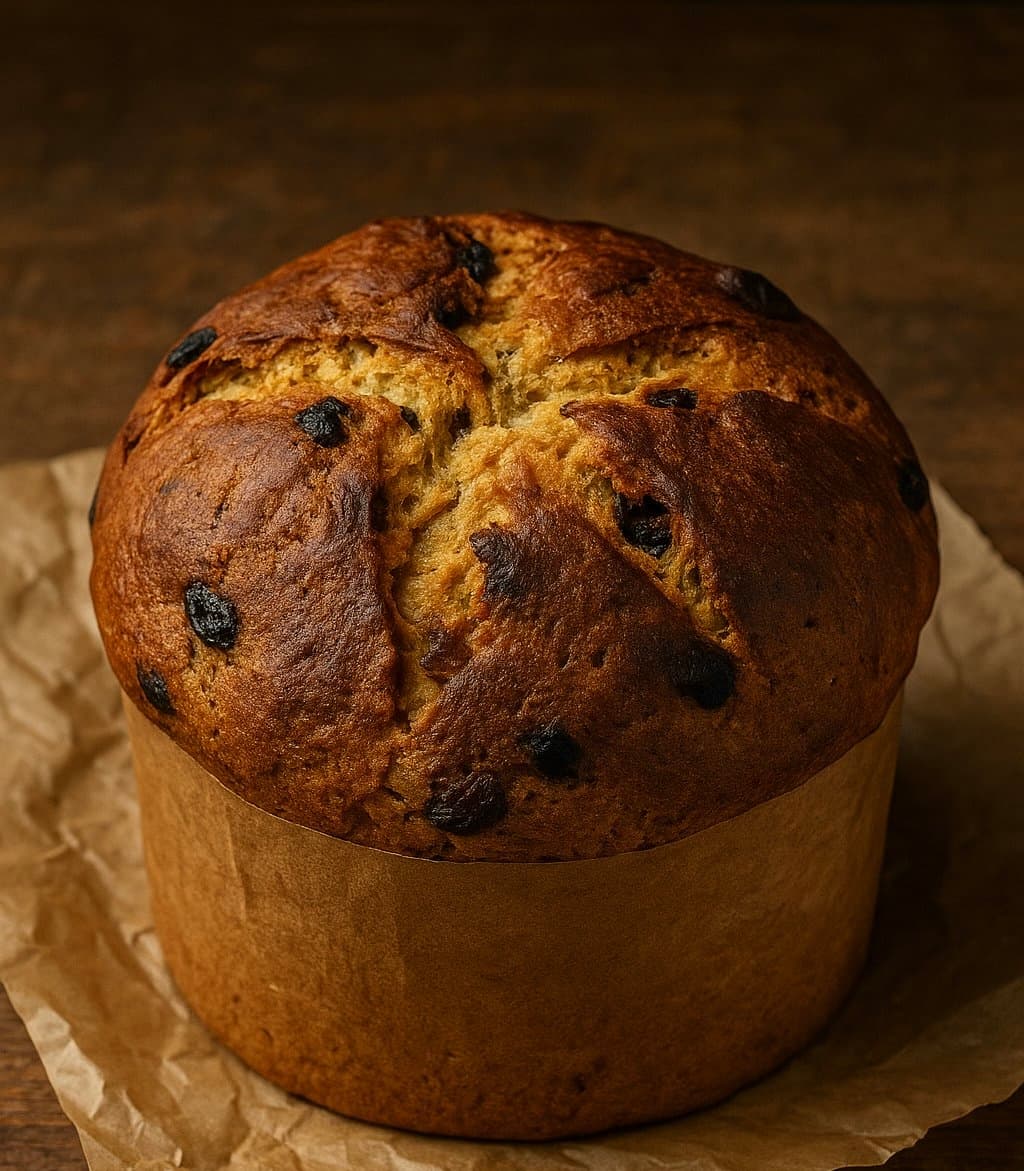
Every December, golden domes of panettone begin appearing in shop windows and family tables across Italy. Light and lofty, dotted with jewels of citrus peel and raisins, this Milanese sweet bread has become a beloved emblem of Italian Christmas.
But behind its festive glamour lies a bread shrouded in mystery—one with more legends than confirmed facts, and more secrets than ingredients.
Did a Boy Named Toni Invent It?
The most popular tale traces panettone’s origin to the court of Duke Ludovico il Moro in 15th-century Milan. The story goes that the chef burnt the dessert for a royal Christmas banquet, and a humble scullery boy named Toni saved the day by creating a sweet bread using flour, butter, sugar, eggs and dried fruit. The guests loved it so much, they named it Pan de Toni — Toni’s bread.
Charming? Yes. Verifiable? No. Most historians agree this is a romanticised legend. Linguistically, panettone is more likely derived from panetto (small loaf) with the -one suffix to mean “big bread.” But the story lives on — because like the bread itself, the truth is slow to rise and hard to pin down.
The Medieval Roots: Reserved for the Rich
Long before the name panettone appeared in writing, enriched festival breads were being baked in Lombardy. In medieval Milan, baking with white wheat flour was a luxury. A 1395 city edict allowed bakers to use it for “pan di sciorè” (lords’ bread) only at Christmas.
Early versions were likely flatter and denser than today’s towering loaves, but still enriched with butter, eggs and dried fruits. By the 17th and 18th centuries, panettone-like loaves were baked by convents as gifts for benefactors — adding a layer of religious tradition to this already-symbolic bread.
The First Written Clue
The earliest known written reference to panettone appears in 1839, in the Milanese-Italian dictionary by Francesco Cherubini. He describes it as “a kind of bread made with flour, butter, eggs, sugar and raisins”—a description recognisable even today.
At this point, panettone was still a regional treat, lovingly crafted by hand in Milanese homes and bakeries. There was no standard recipe, no uniform shape — only a shared understanding that this was Christmas bread, rich in both ingredients and meaning.
Secrets of the Modern Panettone
The panettone we recognise today — tall, airy, wrapped in paper, and cooling upside-down — didn’t appear until the 20th century. And it took a Milanese baker named Angelo Motta to transform it into a national symbol.
Motta introduced a triple-proofed dough, enriched with butter and studded with fruit, baked in tall paper moulds. Most importantly, he developed the technique of hanging the bread upside-down after baking to prevent collapse. His rival, Gioacchino Alemagna, further refined the process — and their friendly rivalry turned panettone into a phenomenon.
By the 1950s, industrial production made panettone accessible across Italy. What had once been a handmade luxury for Christmas Day became a giftable treat found in every household — from factory workers in Naples to grandmothers in Turin.
Why Panettone Is So Hard to Make at Home
Panettone isn’t just bread. It’s a test of a baker’s patience, discipline, and devotion.
True artisanal panettone is made with natural sourdough and takes at least three days to produce. The dough begins as a soft, sticky mass — weak and hard to shape. It undergoes multiple feeds and rests, each timed and temperature-controlled. The butter must be added in stages. The fruit must be folded gently to preserve air bubbles. And then, just when it seems done — it’s hung upside-down on skewers to finish cooling.
Even professionals struggle. In Italy, the Consorzio del Panettone Artigianale sets strict standards: no additives, no shortcuts, no preservatives.
That’s why so few home bakers attempt the full traditional version. It’s not just a recipe — it’s a ritual.
Panettone Across the World
Today, panettone is a global affair. In Peru, Argentina and Brazil, it’s as much a Christmas staple as it is in Italy. In London and New York, Michelin-starred pastry chefs infuse it with exotic fruits and chocolate. In Singapore, you might find panettone flavoured with pandan or matcha.
And yet, in Milan, families still slice panettone at the table on Christmas Eve, toasting with prosecco or espresso. Leftovers are eaten for breakfast, turned into French toast, or layered in trifles.
Some things never change.
Coming Soon: Bake It Yourself
If you’re ready to uncover the secrets of panettone in your own kitchen, our 80 Bakes Panettone recipe will be published this Thursday. Whether you attempt the full sourdough version or a more beginner-friendly yeasted loaf, you’ll gain a new appreciation for this most mysterious of breads.