Around the World in 80 Bakes: Stop #45 — Hot Cross Buns
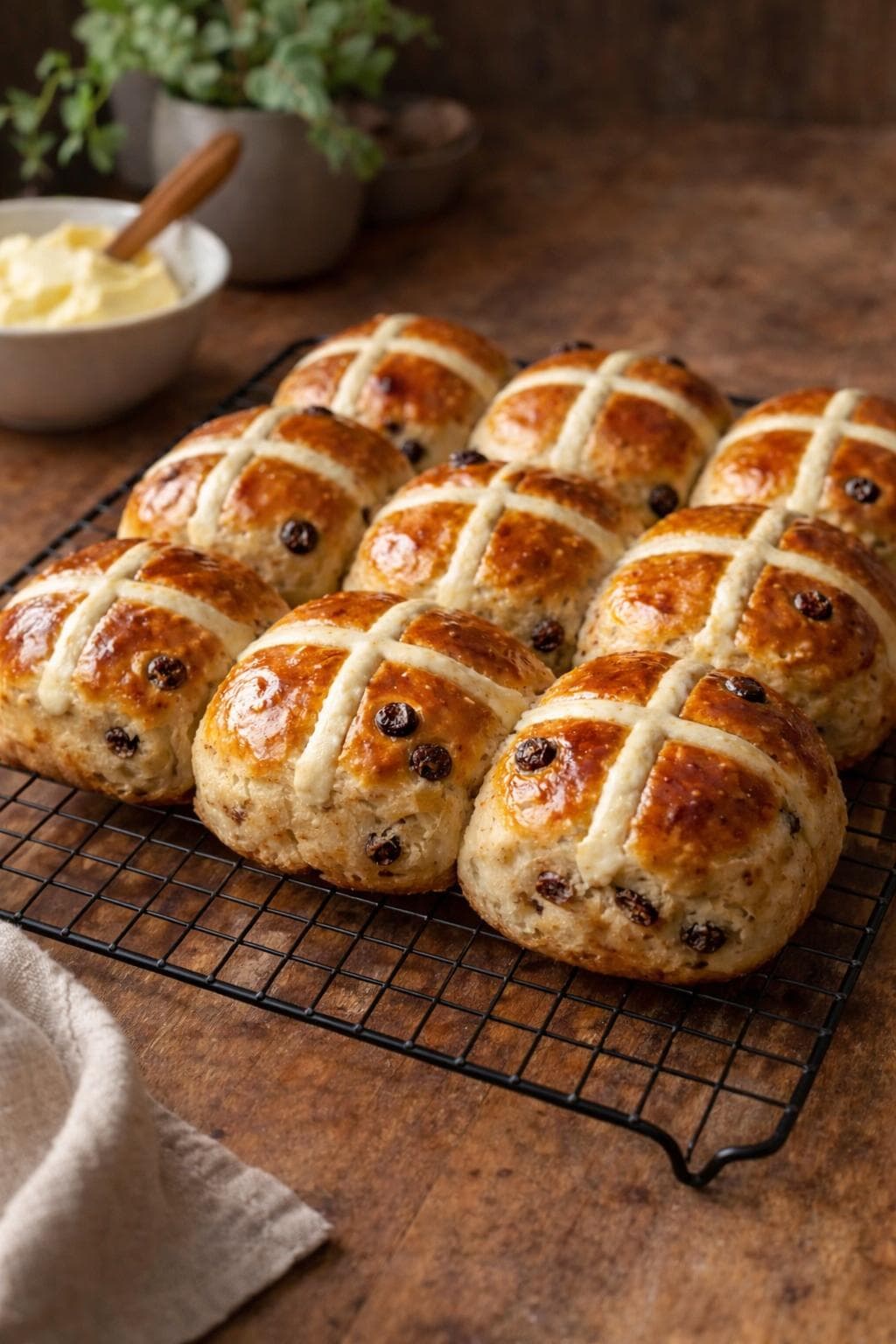
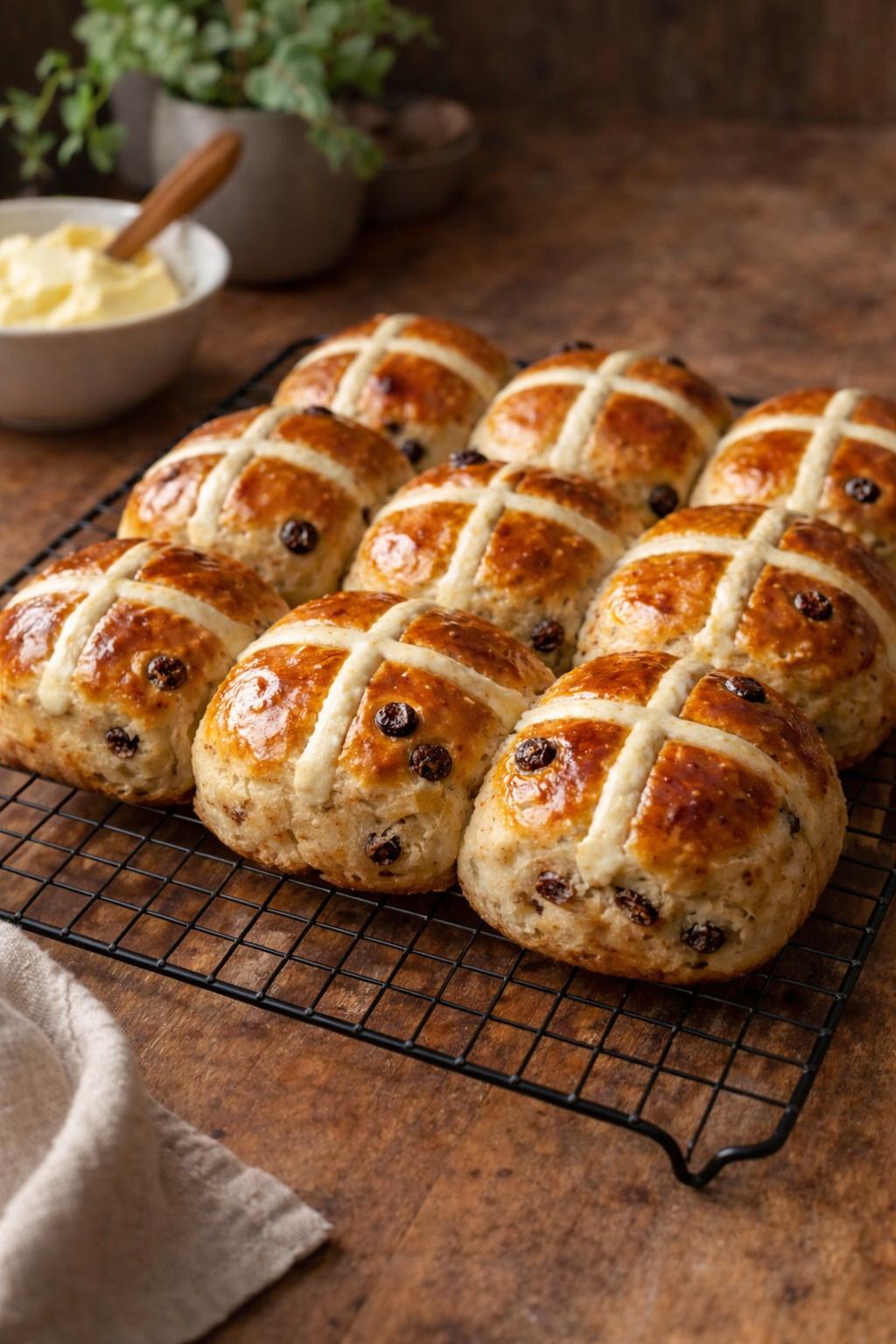
Each spring, as Easter approaches, hot cross buns return to bakeries and kitchens with quiet familiarity. Marked with a cross and scented with spices, they are often treated as a simple seasonal bake.
Though synonymous with Good Friday today, the hot cross bun has its roots in far older traditions where bread marked the passage of the seasons.
Early Symbolism Before Christianity
The marking of bread with a cross predates Christianity. Historical accounts suggest that cross-marked loaves were used in ancient civilisations, including Greece and Egypt, as part of seasonal offerings. These markings were not religious in the Christian sense but symbolic of natural cycles.
In early Britain, similar practices are often linked to spring festivals. Some historians associate these breads with traditions honouring Eostre, a figure connected to renewal and fertility. This connection is debated and rests on limited historical evidence, but it reflects a broader pattern in which food was used to mark seasonal transition.
The cross itself is widely understood to have symbolised the four seasons or phases of the moon. In this context, it represented balance, continuity, and the cyclical nature of life.
These early breads were therefore not religious objects in the modern sense. They were markers of time.
The Christian Reinterpretation
With the spread of Christianity across Europe, existing customs were reinterpreted rather than replaced. The cross on the bun took on a new meaning, representing the crucifixion of Jesus Christ. The spices came to symbolise those used in burial, and the bun itself marked the end of Lent.
By the fourteenth century, the hot cross bun had become part of established religious practice in England. One account places its development at St Albans Abbey in 1361, where a monk distributed spiced buns marked with a cross to the poor on Good Friday.
This marked a clear shift in meaning. The bun moved from a seasonal food to a deliberate expression of faith, charity, and remembrance.
Regulation and Religious Tension
As hot cross buns grew in popularity, they also came under scrutiny. During the Tudor period, their production was restricted by law. In the late sixteenth century, spiced buns could only be baked and sold on Good Friday, Christmas, and at funerals.
These restrictions reflected both religious and social concerns. The buns were associated with Catholic practices at a time of Protestant reform, and they had also become surrounded by widespread beliefs about their protective properties.
Some accounts suggest that buns were temporarily banned in London because they were thought to ward off evil and illness.
Rather than diminishing their significance, these measures reinforced their cultural importance.
A Bread of Belief
Historical records show that hot cross buns were treated not only as food but as objects of belief. They were thought to possess protective qualities and were often kept beyond the day they were baked.
It was widely believed that buns baked on Good Friday would not spoil. Some households kept them for an entire year, replacing them annually. Others hung them in kitchens to prevent fires and ensure successful baking.
There were also medicinal associations. Pieces of bun were sometimes retained and used as remedies, reflecting early beliefs in the healing properties of ritual foods.
These practices illustrate how the bun occupied a space between nourishment and belief, where food became part of everyday protection and ritual.
From Street Cry to Tradition
By the 18th century, hot cross buns had become firmly embedded in public life. They were widely sold in English streets, particularly during the Easter period.
Vendors called out a phrase that would later become a nursery rhyme. The line “one a penny, two a penny, hot cross buns” was recorded in London during this period and reflects their widespread popularity.
At this stage, the bun retained its religious association but had also become a familiar and accessible food.
A Tradition That Travelled
As British influence expanded, the hot cross bun spread beyond England and became part of Easter traditions in many parts of the world.
Regional variations emerged. In the Caribbean, the bun evolved into a richer, spiced loaf often made with molasses and served with cheese. In modern bakeries, new versions continue to appear, including chocolate and savoury adaptations.
Despite these variations, the defining elements remain consistent. The cross, the spices, and the timing continue to anchor the bun to its historical origins.
Enduring Meaning
The hot cross bun has endured because it has adapted while retaining its identity. It reflects the merging of older seasonal traditions with later religious meaning, shaped further by folklore and everyday practice.
It continues to mark a moment in time. It signals the end of Lent and the arrival of Easter, carrying forward a tradition that has persisted for centuries.
In this sense, the hot cross bun is a record of how food can carry belief, memory, and continuity across generations.
If you would like to try baking hot cross buns at home, you can find the full recipe here: Hot Cross Buns Recipe.
Sources and references:
English Heritage; Great British Chefs; BBC and ABC historical features; Wikipedia (general background)