Cookie cutters may seem like simple tools — unassuming bits of metal or plastic that press shapes into dough — yet their history reaches far deeper than most bakers realise. Long before they became colourful Christmas essentials, they were carved by hand, guarded by guilds, shaped by the spice trade, and intertwined with rituals, feast days, and social customs.
Today’s cheerful cutters carry traces of centuries of craftsmanship, symbolism and celebration. To understand how they became what they are now is to trace a line through baking itself, from ancient ceremonial breads to modern holiday trays.
The Earliest Ancestors — Carved Moulds, Festivals and Ritual Bread
The true ancestors of cookie cutters were not cutters at all, but carved moulds. In ancient civilisations such as Egypt, Greece and Rome, bakers pressed dough into wooden or clay moulds to form decorative shapes. These early moulded breads were often linked to rituals and festivals: honey cakes offered to gods, stamped loaves used in religious ceremonies, or pastries crafted for seasonal feasts.
These breads carried symbolic meaning. A carved image stamped in dough was not simply decorative; it conferred protection, fortune, or spiritual significance. Roman bakers sometimes cut around the shapes by hand, using knives or styluses to follow the outline of a moulded figure — a primitive precursor to the idea of cutting precise shapes.
Across ancient Asia, too, moulded pastries played important roles. Mooncake moulds in China, for example, were carved with intricate patterns that symbolised longevity or harmony. Though not direct ancestors of European cookie cutters, they reflect a widespread human instinct: to shape dough into symbolic forms for special occasions.
Medieval Europe — Gingerbread, Spice Routes and the Rise of Carved Boards
By the Middle Ages, the concept of shaped biscuits began to flourish in Europe. The great spice routes brought ginger, cinnamon, cloves and nutmeg into European kitchens, transforming simple doughs into fragrant, warming treats. Gingerbread, in particular, became a favourite across German-speaking regions, Scandinavia and parts of Eastern Europe.
This period produced the iconic carved wooden boards that shaped gingerbread into elaborate figures. German Lebkuchen moulds from Nuremberg, Ulm and Basel were carved with saints, knights, heraldic emblems and mythical creatures. Dutch bakers pressed dough into the ornate speculaas boards that still survive today, featuring windmills, ships and folkloric motifs. These boards were artworks in their own right, carved by specialist craftsmen who often belonged to the same guild networks as carpenters and woodblock printers.
The Middle Ages also brought formality to the world of baking. In major cities, professional gingerbread guilds controlled the right to bake, mould and sell shaped gingerbread. These guilds protected recipes, regulated production and preserved artistic styles across generations. A shaped biscuit from a guild baker was a mark of skill and training, not a casual home project.
Through these centuries, shaped dough was largely associated with feast days, fairs and religious observances. The mould gave the biscuit meaning, and the biscuit gave the celebration flavour.
The Renaissance to Early Modern Europe — From Moulded to Cut
Between the 1500s and 1700s, two developments reshaped baking traditions. The first was an explosion in metalworking. The second was the spread of copper, tin and later steel as common materials for household tools.
As metal became more available, artisans began bending thin strips of tinplate into shapes: stars, animals, crescents, flowers. These early cutters were small works of craftsmanship, often soldered by hand and sold by metalworkers rather than bakers. They coexisted with wooden moulds for a time — moulds for highly detailed gingerbread and cutters for simpler shapes.
During this period, shaped biscuits shifted from exclusive festival food to more everyday treats for the wealthy and eventually the middle classes. England’s court of Elizabeth I popularised gingerbread figures, sometimes made to resemble visiting dignitaries or courtiers. Across Scandinavia, spiced biscuits like pepparkakor were shaped using simple cutters and baked for winter celebrations.
The idea of “cutting” cookies became more widespread as recipes evolved. Early English cookbooks began referencing “cut biscuits” and “little cakes to be cut with a tin”, marking a transition from moulding to cutting as a baking norm.
Industrialisation — The Moment Cookie Cutters Became Household Tools
The 19th century changed everything. Industrial manufacturing made tin cheap, light and easy to shape. Factories could produce cookie cutters by the dozen rather than by individual craftsman.
This shift transformed the cutter from a niche artisan tool into a familiar household item.
Mass production meant that cutters could be sold in general stores, catalogues and later department shops. Families could afford sets of shapes rather than a single ornamented mould. Meanwhile, improvements in home ovens and the increasing availability of white sugar encouraged the rise of sugar cookies — doughs perfectly suited to clean, crisp edges.
Christmas baking traditions were also evolving. European immigrants carried their gingerbread and biscuit customs to America. As Christmas became a more family‑centred holiday, shaped cookies became a beloved part of home celebration. Newspaper illustrations and early women’s magazines in the late 1800s began featuring cut‑out cookie recipes, solidifying the cultural connection.
The cookie cutter had officially entered domestic life.
The 20th Century — Plastic, Colour and Playfulness
The arrival of plastic in the mid‑1900s sparked another transformation. Suddenly cutters were bright, lightweight, safe for children and exceedingly cheap. Manufacturers created sets themed around holidays, fairy tales, animals and eventually popular characters.
This era made cookie cutters part of childhood itself. Baking became not only a household task but an activity for children, especially at Christmas. Simple sugar cookies shaped like stars, bells, angels and Christmas trees defined an entire generation’s festive memories.
The accessibility of cutters also sparked a wave of creativity. Home bakers were no longer limited to traditional shapes. They could experiment with whimsical outlines, stamp‑style cutters and multi‑piece scenes.
The 21st Century — Precision Tools, Custom Designs and Global Craft
Modern cookie cutters reflect extraordinary diversity. Stainless steel cutters create clean, professional edges for decorators. Embossed cutters imprint detailed patterns directly into the dough. Interlocking cutters build three‑dimensional trees, houses or animals. Silicone cutters accommodate soft or delicate doughs. Meanwhile, 3D printing has enabled personalised designs, from names and logos to intricate silhouettes.
At the same time, a parallel interest in vintage baking tools has grown. Collectors hunt for 19th‑century tin cutters or carved gingerbread boards, recognising them as pieces of culinary history. It is now possible for a modern baker to own a cutter almost identical to one used 150 years ago — and still use it in the kitchen today.
Thus the cookie cutter straddles past and present: a modern tool with ancient roots.
How Cookie Cutters Became Bound to Christmas
Several forces converged to make cookie cutters an unquestioned part of Christmas baking.
Spices like ginger, cinnamon and cloves were historically expensive and associated with feast days, making spiced biscuits a luxury reserved for winter.
Gingerbread and other shaped biscuits became traditional at winter fairs and church festivals. Immigrant communities in North America carried these customs with them, popularising cut‑out cookies as Christmas treats.
And as the holiday itself shifted into a celebration centred around family, children and the home, baking cut‑out cookies became an activity passed through generations.
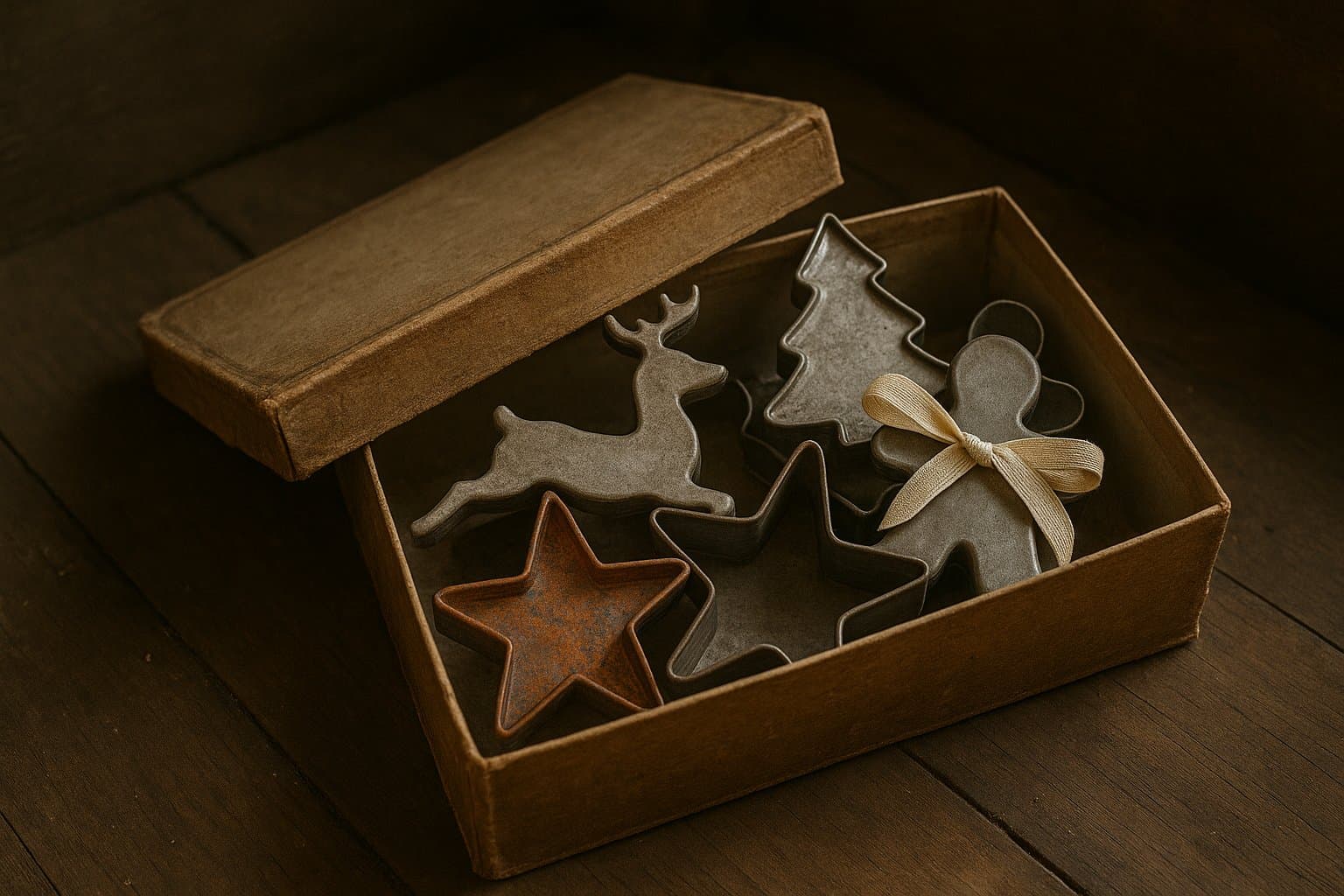
By the 20th century, the connection was complete. The shapes — stars, bells, reindeer, angels — reflected the symbols of the season, and the act of cutting cookies became part of the ritual of preparing for Christmas. Today, a tray of cut‑out cookies feels almost inseparable from the season’s warmth.
The journey of the cookie cutter is a journey through time, shaped by trade, craftsmanship, technology and tradition. From ancient moulded honey cakes to carved medieval gingerbread boards, from handmade tin shapes to colourful plastic cutters for children, the story of the cookie cutter traces the evolution of festive baking itself.
Behind every cutter lies a lineage of bakers, artisans and families. And each time we roll out dough and press a shape into it, we echo centuries of celebration, creativity and memory — turning simple ingredients into something meaningful, shared and enduring.
Curious to bake your own festive batch? Try this classic Gingerbread Cookie Recipe — crisp-edged, warmly spiced, and perfect for your favourite cookie cutters.
And if you’re looking for the perfect shapes to add to your own festive baking, discover the Top Christmas Cookie Cutters for 2025 here — from timeless classics to this year’s most delightful new designs.