A Brief History of Chocolate in Baking
Chocolate has a long and fascinating journey from sacred rituals in ancient civilisations to birthday cakes and brownies on our kitchen tables today. While we often associate chocolate with indulgence and celebration, its roots go far deeper, stretching back over 5,000 years to the tropical rainforests of what is now Mexico.
From Sacred Trees to Bitter Brews
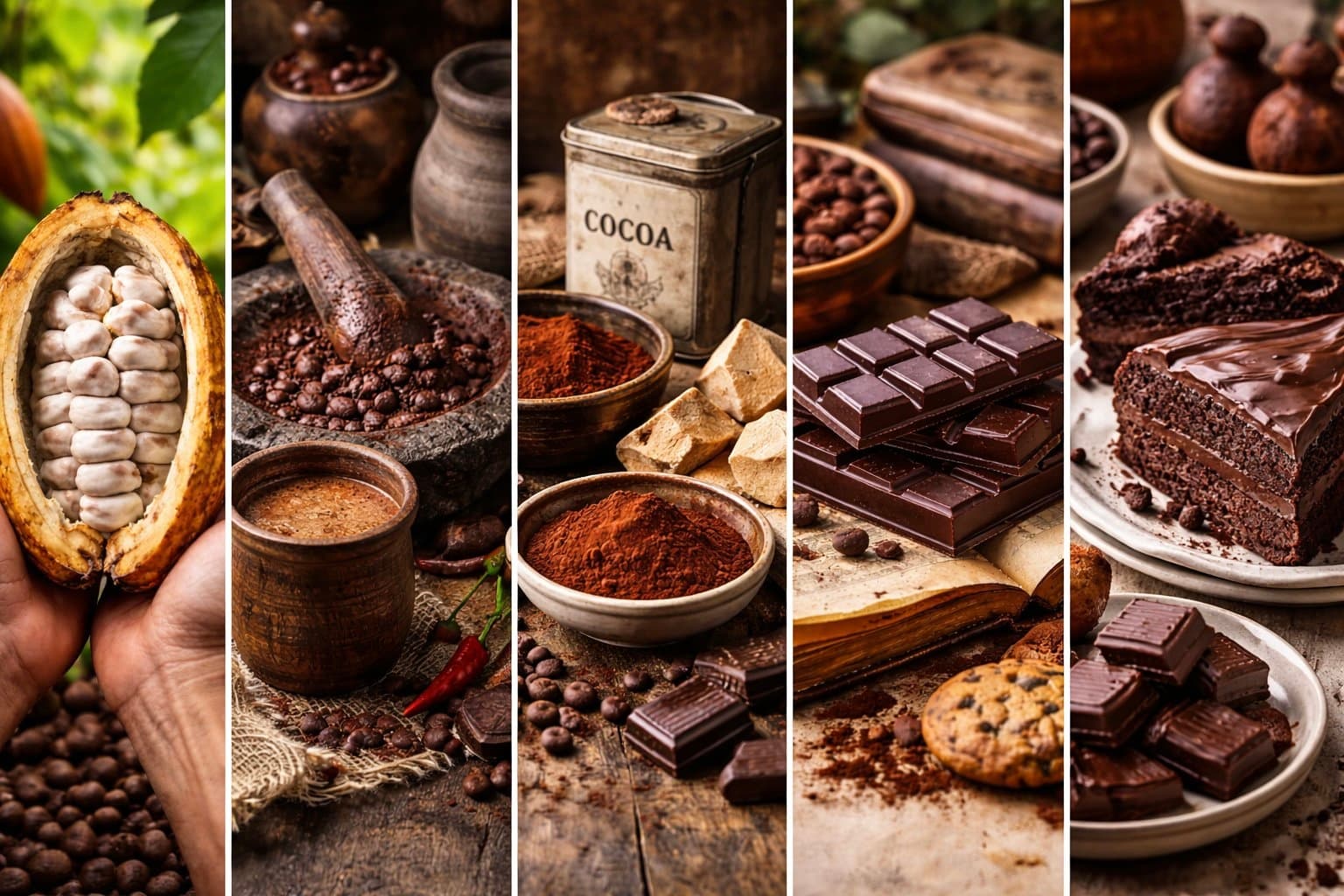
The first known domestication of the cacao tree took place over 5,000 years ago in Mesoamerica. Early cultures such as the Olmecs and later the Maya and Aztecs harvested the cacao bean not for sweetness, but for its bitter richness and symbolic value. The beans were roasted, ground, and mixed with water, chilli, or maize to create a spiced drink that was believed to have spiritual and healing properties.
To the Maya, cacao was a divine gift, often featured in religious ceremonies and burial rituals. The Aztecs valued cacao so highly that the beans were used as currency, and the chocolate drink, called xocolatl, was reserved for the elite, warriors, and priests.
Chocolate Crosses the Ocean
In 1519, Spanish conquistadors led by Hernán Cortés encountered cacao during their expeditions in the Americas. Recognising its cultural and ceremonial significance, they brought it back to Spain, where it was initially treated as a form of medicine.
For the next few centuries, chocolate gained popularity across Europe but only among the upper classes. Served as a hot, spiced drink (this time often sweetened with sugar or honey), it was praised for its energising properties and debated for its supposed health benefits and religious implications. Some even considered it an aphrodisiac.
From Drink to Bar: A Turning Point
It wasn’t until the 19th century that chocolate became the versatile ingredient we now use in baking. In 1828, Dutch chemist Coenraad van Houten invented the cocoa press, a device that separated cocoa butter from roasted cacao beans, leaving behind a dry cake that could be pulverised into cocoa powder. This revolutionised chocolate production by making it more affordable, consistent, and practical for baking.
Soon after, in 1847, the British company J.S. Fry & Sons combined cocoa powder, sugar, and cocoa butter to produce the world’s first solid chocolate bar. For the first time, chocolate could be moulded, stored, and eaten in solid form, a huge leap forward from its liquid-only past.
This innovation laid the groundwork for chocolate’s integration into everyday desserts, particularly baked goods.
Chocolate Joins the Oven
By the late 1800s, chocolate had begun to appear in cakes, puddings, and pastries, and not just as a garnish or glaze, but as a star ingredient. Early chocolate cakes were dense and dark, often using cocoa powder for depth and colour.
In Europe, elegant bakes like Sachertorte (a rich Austrian chocolate cake filled with apricot jam) became signatures of refined patisserie. Across the Atlantic, American home bakers were experimenting with chocolate in cookies, cupcakes, and the newly popular brownie, a chewy, chocolatey square that first appeared in cookbooks around the turn of the 20th century.
As cocoa powder became a pantry staple and solid chocolate became widely available, chocolate’s role in baking expanded. With the rise of baking powder and improved ovens, lighter and fluffier chocolate cakes such as Devil’s Food Cake emerged, offering a bold contrast to earlier sponge and pound cakes.
Chocolate in the Modern Kitchen
Today, chocolate is indispensable in baking. Whether it’s swirled into batters, whipped into mousse, melted into ganache, or folded into cookie dough, chocolate brings richness and depth to both rustic and refined bakes.
From dark to milk to white varieties, and from chips to couverture to powder, chocolate offers endless possibilities. It has become both a comfort food and a festive treat, used in everything from simple tea-time bakes to elaborate celebration cakes.
What began as a bitter ceremonial brew over 5,000 years ago has become one of the world’s most beloved ingredients, anchoring some of our most joyful moments and favourite recipes.
Did you enjoy this article?
Rate it below and let others know what you think!